 24/7 Emergency

Jump To Section
Anesthesiology Testimonal

At CARE, we know anesthesia can feel daunting for pet families. Many pets need it for diagnostic or surgical procedures, and our anesthesia service is dedicated to making the process as safe and comfortable as possible.
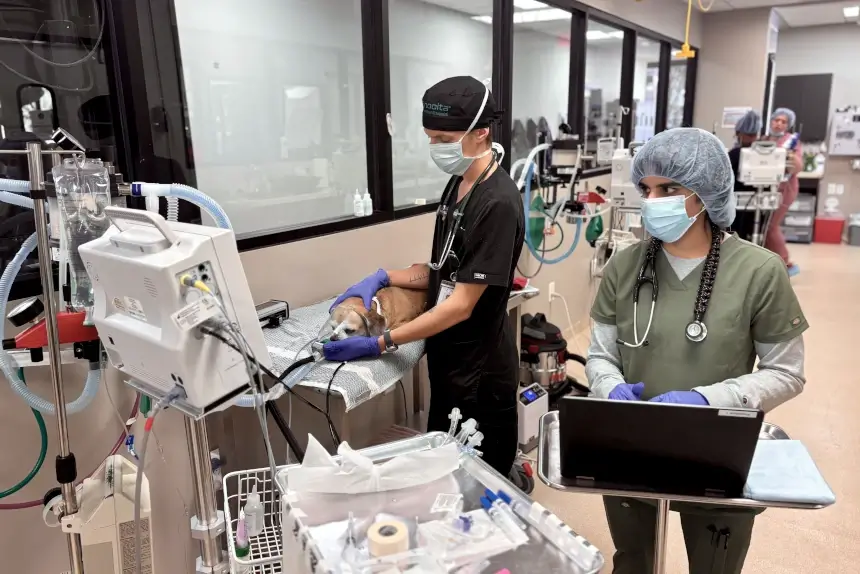
Our team includes a board-certified anesthesiologist – one of only two in private practice in North Carolina. Experienced veterinary technicians also provide individualized anesthesia oversight for your pet. Each patient receives a tailored drug protocol based on their health status and needs. Throughout the procedure, advanced monitoring tools help us recognize and address complications quickly. Care continues into recovery, where we closely watch your pet as they awaken to ensure they remain safe, calm and comfortable.
In addition to general anesthesia care, our service offers state-of-the-art pain management, including ultrasound-guided local anesthesia. Sometimes, full anesthesia is not necessary, and sedation is the better option. In those cases, we collaborate with your pet’s other CARE veterinarians to determine the safest plan.
As a support service, we work closely with all specialties at CARE, with one goal: minimizing risk while optimizing your pet’s safety and comfort.
If your pet is admitted for hospitalization at CARE, please review our Admissions Guide to help answer questions about your pet’s stay.
Conditions We Treat
Some of the most common conditions we manage include:
- Cardiac disease
- Lung pathology
- Liver dysfunction
- Kidney failure
- Endocrine disease (e.g., Cushing’s, Diabetes Mellitus)
Diagnostics We Use/Services We Provide
Working alongside CARE’s other specialty veterinarians, our anesthesiology team carefully determines and implements the best sedation and pain management options for your pet. This process involves monitoring your pet’s condition before, during and after his or her procedure. Some of the diagnostics we use and services we provide include:
- Monitoring of noninvasive blood pressure, pulse oximetry, end tidal carbon dioxide, temperature, heart rate and rhythm and respiratory rate
- Invasive blood pressure monitoring
- Airway management
- Locoregional anesthesia
- Blood gas monitoring
- Neuromuscular blockade monitoring
- Blood product transfusions
contact us or call (704) 457-2300.
Anesthesiology FAQ
(hidden)
What is the difference between sedation and anesthesia?
- When your pet is sedated for diagnostics such as x-rays or blood draws, they are in a calm state but can respond to stimuli.
- Anesthesia means your pet is unconscious and unaware of their surroundings. This is necessary for invasive procedures, such as surgery, or procedures for which your pet must be very still (for example, an MRI). It also means that they may not have control over normal body functions (swallowing, breathing), which is why anesthesia requires more intense monitoring to ensure your pet’s safety.
- Your CARE veterinarian will determine whether your pet needs sedation or anesthesia.
Is it safe for my pet to undergo anesthesia?
The anesthesia service works closely with other CARE veterinarians to determine your pet’s risk of anesthesia. For most pets, these risks can be minimized with proper care provided by the CARE anesthesia team.
What is local anesthesia (also referred to as locoregional anesthesia, ultrasound-guided anesthesia)?
My anesthesiologist is board certified. What does that mean?
Board certification is a rigorous credentialing system that veterinary anesthesiologists go through to enhance their education and experience and to bring you the most current knowledge and skills. For more detailed information, you can visit the American Veterinary Medical Association (AVMA) website, which provides an overview of board certification in veterinary specialties.
Our Anesthesiology Doctors

Anesthesiology Testimonials
Dr. Jones not only provides my patients with formulated plans to ensure the best outcomes, but she also suggests other options that consider my patients’ entire medical histories and the clients’ financial goals. Having a board-certified anesthesiologist on board increases peace of mind, enables earlier discharge from the hospital and decreases post-operative pain.
- I have worked with Dr. Jones on interventional cardiology procedures including pacemaker implantation, mitral valve repair, balloon valvuloplasty, PDA occlusion and intrahepatic portosystemic shunt coil embolization.
- She provides a custom anesthetic plan to ensure patient safety and comfort.
- Her plans are specifically engineered to provide the best outcome possible for my patients, my team and my clients.
- Her expertise applies both during the anesthetic procedure and throughout anesthetic recovery.
- I value Dr. Jones’ advanced knowledge/training in pain management and anesthesia, her attention to detail and her thorough communication.
What stands out most about working alongside Dr. Jones is her commitment both to patient comfort and safety and to elevating technical staff members’ capabilities, igniting in us a passion for anesthesia/analgesia. She provides guidance during critical cases while also supporting our autonomy and critical thinking skills.
- She is present and available to us throughout every phase of anesthesia.
- Her expertise changes the outcomes of even our most “everyday” procedures. For example, by performing ultrasound guided nerve blocks on our TPLO patients, she keeps their operative and post-operative pain levels low without affecting their ability to get up and walk, with assistance, soon after surgery.
- As a specialty anesthesiologist, she anticipates and prepares for all possible complications based on a patient’s health history and disease process.
- Anesthesia is not only about keeping a pet asleep, but also about managing their pain after they awaken.
- For Dr. Jones, while the goal is to minimize the amount of time a patient spends under general anesthesia, it is still not to be rushed.
Videos
When seconds matter, having a board-certified anesthesiologist who trains the entire team makes all the difference. At CARE Charlotte, this shared expertise means advanced anesthesia care is available 24/7, not dependent on a single provider. Our technicians are trained to monitor closely, respond quickly, and support emergency, surgical, and critical care procedures—then remain at your pet’s side to ensure a smooth, comfortable recovery, even overnight.
CARE at Night
Recent Anesthesiology Blog Posts
If you’ve ever had surgery, you probably had an anesthesia team made up of an anesthesiologist and nurse anesthetists. Although you may not remember, they made sure you were well cared for. They also helped you wake up smoothly from anesthesia. At CARE, our...